> For the complete documentation index, see [llms.txt](https://notes.incendium.rocks/pentesting-notes/llms.txt). Markdown versions of documentation pages are available by appending `.md` to page URLs; this page is available as [Markdown](https://notes.incendium.rocks/pentesting-notes/cloud/azure/architecture/rbac-and-abac-roles.md).
# RBAC & ABAC roles
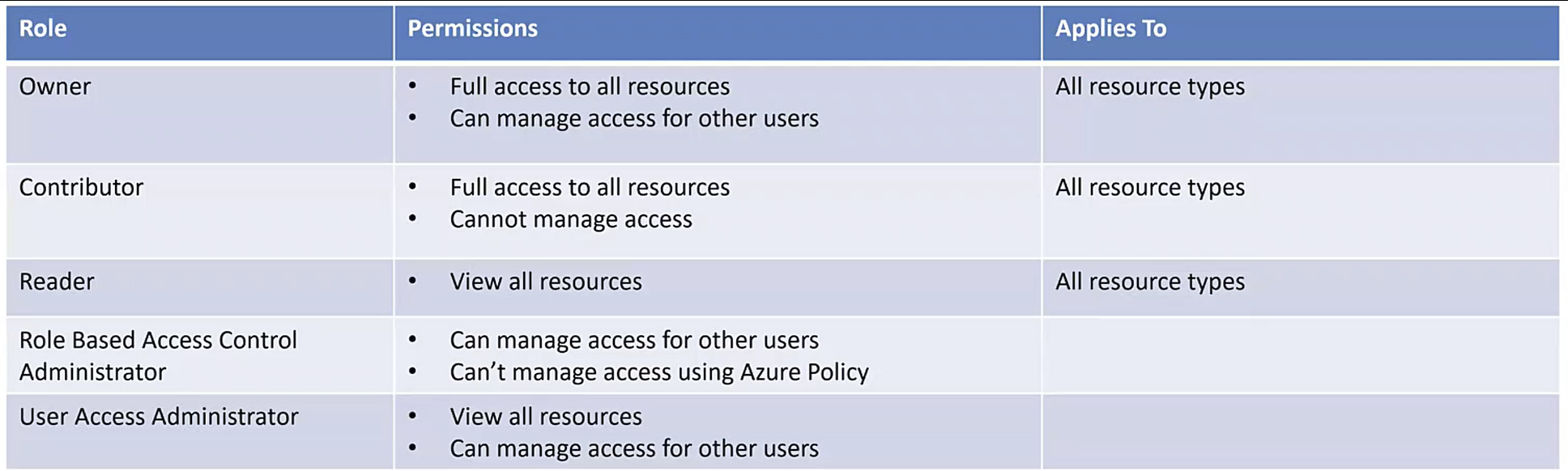
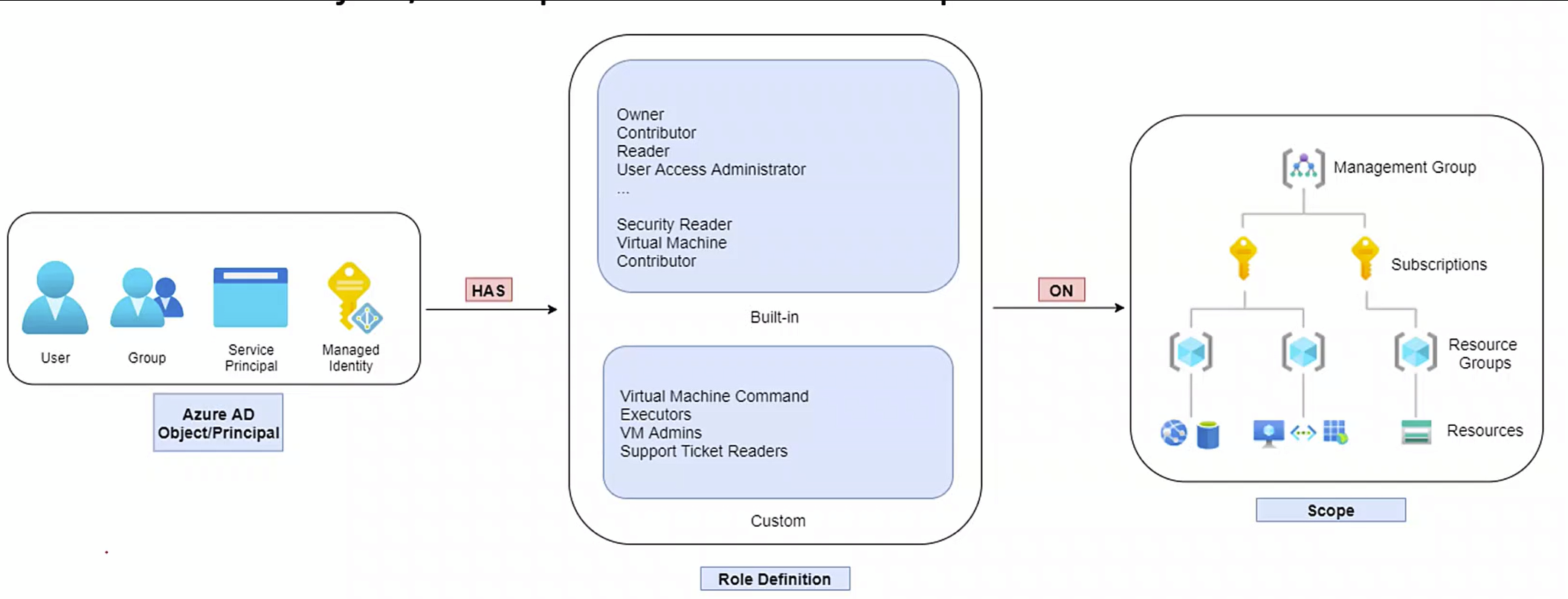
Azure RBAC Roles or simply Azure roles, provides access management for Azure resources using the authorization system of ARM. There are over more than 120 built-in roles and we can define custom roles too.
However, there are five fundamental roles:
### RBAC Assignment
Something to remember:
{% hint style="info" %}
Principal HAS role ON scope
{% endhint %}
### ABAC
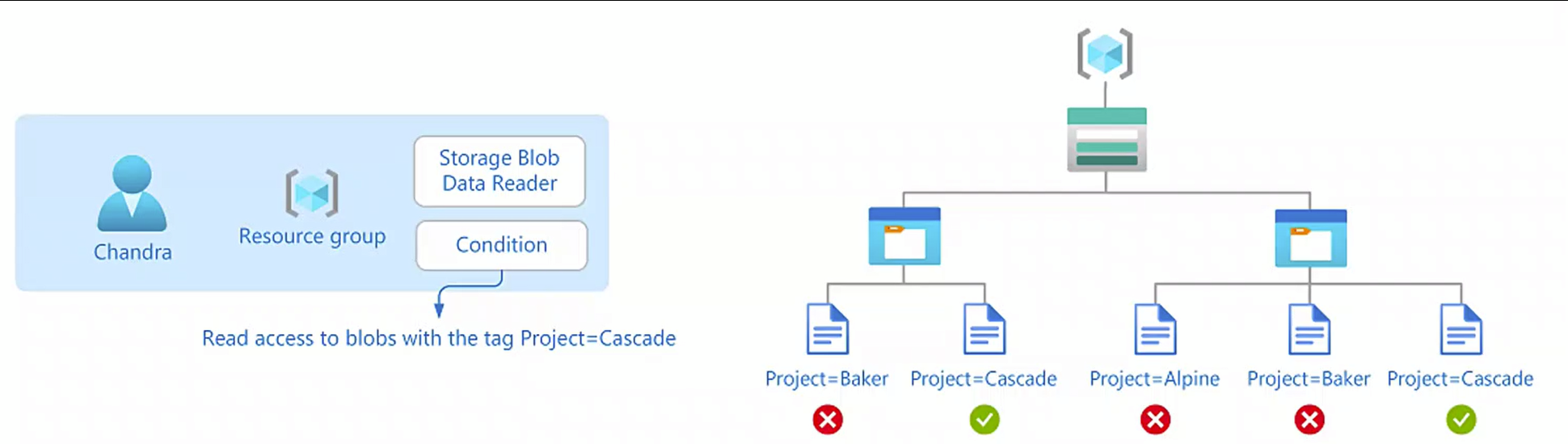
ABAC builds on RBAC and provides fine-grained access control based on attributes of a resource, security principal and environment. These are implemented using role assignment condition.
* Only used by storage accounts
* Low level functionality
If these are all RBAC/ABAC managed, who manages them? Well this is where Entra ID roles come in.